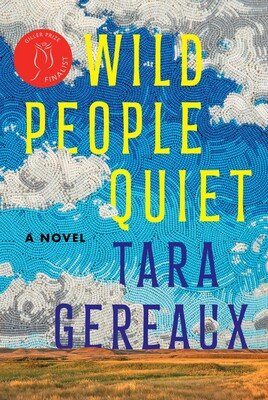
Wild People Quiet
Published in Canada
Short review
Tara Gereaux's Giller Prize-shortlisted novel takes readers to rural Saskatchewan in 1946, a place and time rarely seen in fiction. Florence Banks lives in the small town of Torduvalle, where she has built a respectable life on a secret: she is Métis, passing as white, and she dyes her hair blonde to keep the illusion intact.
That fragile arrangement is tested when Métis farm workers arrive in the district and the government begins pursuing plans to move Métis families off the land they have long occupied. Florence is forced to decide how much of herself she can keep hidden, and at what cost to the people she has distanced herself from.
Gereaux, a Regina writer and the author of Saltus and Size of a Fist, handles this material with restraint. The tension lies less in dramatic events than in what goes unsaid at dinner tables, church halls and kitchen doors. The prairie setting is vividly drawn, and Florence is a complex, sometimes frustrating heroine whose choices feel painfully human. A thoughtful historical novel about identity, belonging and the quiet violence of assimilation.
Sources and retailer details (182 words)
Full review
Wild People Quiet, shortlisted for the 2026 Giller Prize, is the kind of historical novel that illuminates a chapter many readers will know little about. Tara Gereaux, a Regina author whose earlier books include Saltus and Size of a Fist, sets her story in 1946 in Torduvalle, a small Saskatchewan town where reputations are everything and differences are noticed.
Florence Banks has made herself fit in. She is Métis, but she lives as a white woman, colouring her hair blonde and guarding her history carefully. Her careful life begins to shift when Métis labourers come to work on local farms, and when government plans to remove Métis people from their land start to take shape. Suddenly the community Florence has kept at arm's length is on her doorstep, and the cost of her silence becomes impossible to ignore.
Gereaux is good on the textures of postwar prairie life: the weather, the work, the small social rituals that police who belongs. She avoids melodrama, preferring to let pressure build through glances, half-truths and conversations that stop when someone enters the room. Florence is not always likeable, and that is a strength; her compromises are shown as survival rather than simple betrayal.
The pacing is measured, and readers who want a fast plot may find the middle section slow. But the novel's moral seriousness and emotional honesty are considerable. It is a rewarding read for fans of quiet, character-driven historical fiction and anyone interested in Indigenous histories of the Canadian West.