James
Suggested by reader Pat
Short review
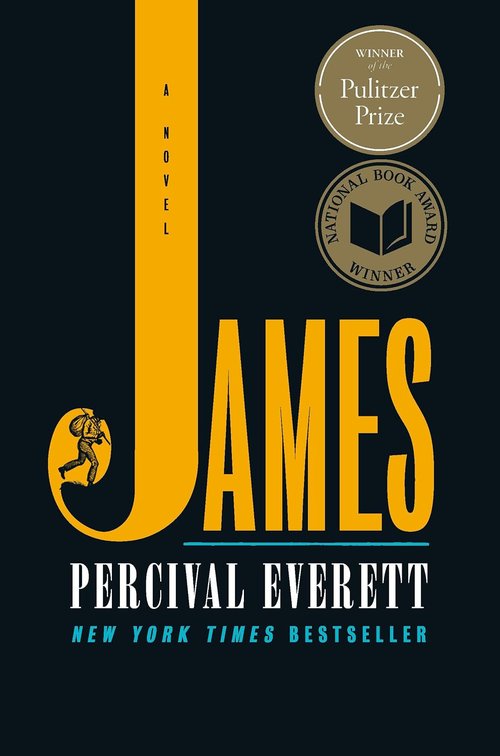
Percival Everett's James retells The Adventures of Huckleberry Finn from the point of view of Jim, the enslaved man who flees down the Mississippi alongside Huck. It won the 2024 National Book Award for Fiction and the 2025 Pulitzer Prize for Fiction, and a reader suggested it for our Historical Fiction shelf.
When Jim learns he is about to be sold away from his wife and daughter, he runs, hiding on an island in the Mississippi, where young Huck soon joins him. What follows tracks the shape of Twain's journey, but everything looks different through Jim's eyes.
Everett's boldest move is language. Jim speaks one way when white people are listening, performing the dialect they expect, and another among his own community, articulate, ironic and deeply literate. That double voice turns the novel into a sharp meditation on survival, intelligence and who gets to tell a story.
It is funny, harrowing and propulsive, and it never feels like homework. You do not need to have read Twain, though doing so adds layers. A modern classic, and a superb suggestion.
Sources and retailer details (179 words)
Full review
Some literary prizes confirm a reputation; the ones James won in quick succession, the 2024 National Book Award for Fiction and the 2025 Pulitzer Prize for Fiction, marked a novel that had already become a reader favourite. Percival Everett takes Mark Twain's Adventures of Huckleberry Finn and hands the story to Jim, the enslaved man who is a supporting figure in the original, and the shift transforms everything.
The outline will be familiar. Jim discovers he is to be sold and separated from his wife and daughter, so he escapes and hides on an island in the Mississippi. Huck, fleeing his own violent father, turns up soon after, and the two set off downriver. Along the way come con men, near-captures and the constant danger of being a Black man without papers in the pre-Civil War South.
Everett's central insight is linguistic. Jim and the other enslaved characters speak in exaggerated dialect when white people are present, because sounding unthreatening is a survival skill. Among themselves they speak precisely and wittily, and Jim even teaches children how to code-switch. Reading becomes an act of defiance, and Jim's secret writing grows into the novel's heartbeat.
The book is often very funny, sometimes brutal, and moves with the pace of an adventure story. It honours Twain while answering him. You can read it without knowing the original, though familiarity enriches the experience. It is essential historical fiction, and we are grateful to the reader who suggested it.