Land
Published in the United Kingdom
Short review
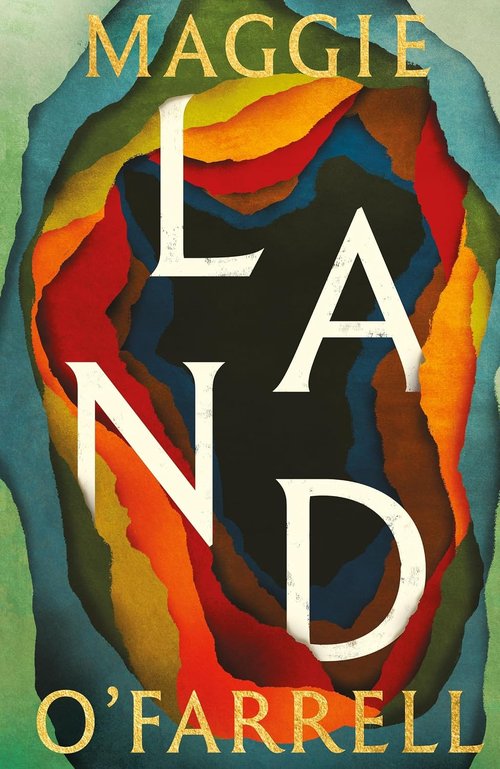
Maggie O'Farrell's tenth novel, Land, has just been named to the Waterstones Book of the Year 2026 shortlist, and it is also shortlisted for Novel of the Year at the An Post Irish Book Awards. The Scotsman called it her most ambitious novel to date.
The story opens in 1865 on a windswept Irish peninsula. Tomás works for the Ordnance Survey, revising the maps of Ireland, and his ten-year-old son, Liam, reluctantly helps him. Their task is to record what has changed since the first survey, which means turning the devastation of the Great Famine into neat, silent lines on paper.
From there the novel widens across generations and continents, from Dublin to Rome, Quebec and Kerala, and weaves in Irish myth alongside family drama. The Irish Times called it a breathtaking epic, while noting that at times it labours to do justice to everything at once.
O'Farrell drew on the life of her own great-great-grandfather, who helped map post-Famine Ireland, and that personal connection gives the book its tenderness. A rich, demanding and moving historical novel.
Sources and retailer details (177 words)
Full review
Land begins, as the Guardian notes, with a line that came to Maggie O'Farrell on a train between Belfast and Dublin: his father was ever a man of few words. The father is Tomás, a civilian employee of the Ordnance Survey in 1860s Ireland, and the novel follows him and his family from a rain-lashed Atlantic peninsula outwards across the world.
The premise is quietly devastating. Tomás and his son Liam are correcting the original survey maps, which means erasing households, redrawing boundaries and recording, in neat symbols, the emptiness the Famine left behind. The Irish Times describes the job as rendering tragedy into mute new maps that show the landscape has changed but cannot explain why. When Tomás has a strange experience in a copse and resolves to make his own kind of map, his family's fortunes shift.
O'Farrell, the author of Hamnet, based the story partly on her great-great-grandfather, who worked for the Ordnance Survey after the Famine. The book ranges widely, through later generations who scatter to Canada and India, and through a strand of Irish myth woven between the nineteenth-century chapters.
Critics broadly agree on its ambition. The Irish Times calls it a breathtaking epic and the Scotsman her most ambitious novel, though the Irish Times also notes moments where it strains to hold everything together. It is now on the Waterstones Book of the Year shortlist and the Irish Book Awards shortlist for Novel of the Year. Patient readers will find it richly rewarding.