Monsters of Ohio
Short review (185 words)
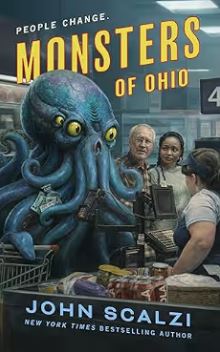
John Scalzi has built a career on making big science-fiction ideas feel like a conversation with a very funny friend, and Monsters of Ohio points that talent at a small Midwestern town that is already having a bad year. Mike Boyd, recently laid off from a government job, heads home to Richland, Ohio, just as the local food plant that keeps the place afloat is being wound down by private-equity owners.
Then a prize cow explodes, and some of the townsfolk start turning into something else entirely. Mike teams up with Dave, an old friend who now wears a police badge, and Andi, a newcomer running the town festival, to work out what is happening before Richland stops being Richland. The joy here is the mix: creature-feature chaos sits alongside a sharp, affectionate look at what happens to places that the economy decides it no longer needs. It is out this week and already climbing the new-release charts, and it reads like the kind of book you finish in two sittings and then press on a friend who swears they do not like science fiction.
Chart & sources
Full review (251 words)
John Scalzi has built a career on making big science-fiction ideas feel like a conversation with a very funny friend, and Monsters of Ohio points that talent at a small Midwestern town that is already having a bad year. Mike Boyd, recently laid off from his government job, heads home to Richland, Ohio, just as the food-processing plant that keeps the town afloat is being wound down by its private-equity owners.
Then a prize cow explodes at the worst possible moment, and some of the locals begin transforming into creatures nobody has a name for. Mike falls in with Dave, an old friend who is now a police officer, and Andi, a newcomer who has taken on the thankless job of running the town festival. Together they try to piece together what is going on while the rest of Richland argues, panics and, in a few memorable cases, grows extra limbs.
What lifts the book above a simple monster romp is its setting. Scalzi clearly cares about towns like Richland, and the comedy never punches down at the people who live there. The real horror is quieter: shuttered factories, absentee owners and the sense that decisions about a community's future are being made somewhere far away. The jokes land, the pacing is brisk and the central trio are easy company. Readers who came to Scalzi through Old Man's War or The Kaiju Preservation Society will find the same warmth and wit, now wrapped around a story about home, work and belonging.