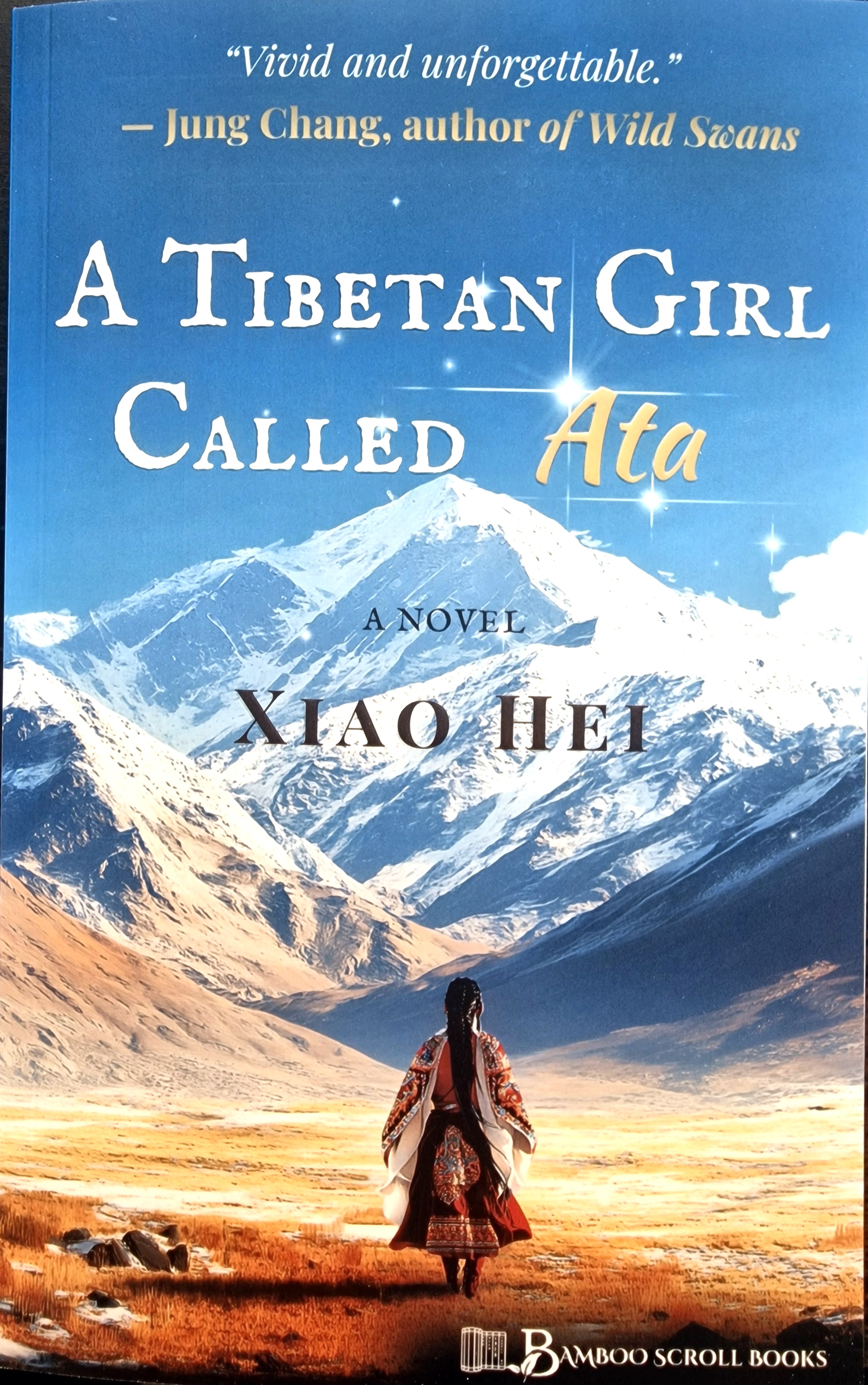
A Tibetan Girl Called Ata
Company Pick — reviewed by BooksGoSocial
Published in England
Short review
Xiao Hei's A Tibetan Girl Called Ata is a love story written in the shadow of history. It opens in Chengdu in the spring of 2008, when Han Ge, a divorced Han Chinese antiques trader with money, contacts and a taste for risk, meets Ata, a young Tibetan singer who runs a shop selling lamps and handicrafts. A deal over a gilded Buddha statue becomes the start of a courtship that neither of them is prepared for.
Xiao Hei is the pen name of Zhang Pu, the Chinese translator of Wild Swans and a writer with a long career in publishing; this is his first novel to appear in English, in a translation by Esther Tyldesley. The book is inspired by a true story, and its strength lies in how closely it watches ordinary lives as the unrest in Lhasa spreads mistrust between Han Chinese and Tibetan communities.
Ata is the novel's beating heart: devout, stubborn, funny and fiercely independent, tied to family and faith while living in a city that does not quite accept her. Readers who value historical fiction that makes a recent political crisis feel personal, and who are ready for a romance that refuses easy comfort, will find this a moving and memorable read.
Sources and retailer details (208 words)
Full review
A Tibetan Girl Called Ata sets out to show what happens when politics enters the most private parts of a life. Xiao Hei, the pen name of Chinese-born, London-based writer and translator Zhang Pu, builds the novel around one relationship: Han Ge, a confident Han Chinese antiques dealer, and Ata, a young Tibetan singer whose nerve and independence unsettle him from their first meeting in Chengdu in 2008.
The early chapters are rich in place. Teahouses, card tables, late meals, bars and gossip give the city a lived-in texture, and the small rituals of courtship are drawn with warmth and humour. Ata is never a simple object of desire. She keeps her shop, sings in Tibetan bars, and stays loyal to family, faith and her teacher, living inside a Chinese city without being absorbed by it. That identity is exactly what draws Han Ge to her, and what he struggles to understand.
As the unrest in Lhasa deepens, the story narrows and darkens. Ata's loyalty to her brother puts her in danger, and Han Ge discovers how little his money and connections count for against official suspicion. Some readers may find the opening romance moves quickly, but its later sections gather real force, because everything set up earlier finally has consequences.
The author has described the book as rooted in a story told to him after the 2008 Lhasa riots. Translated by Esther Tyldesley and published in Britain by Bamboo Scroll Books, it is a serious, compassionate novel for readers who want history told through human lives.