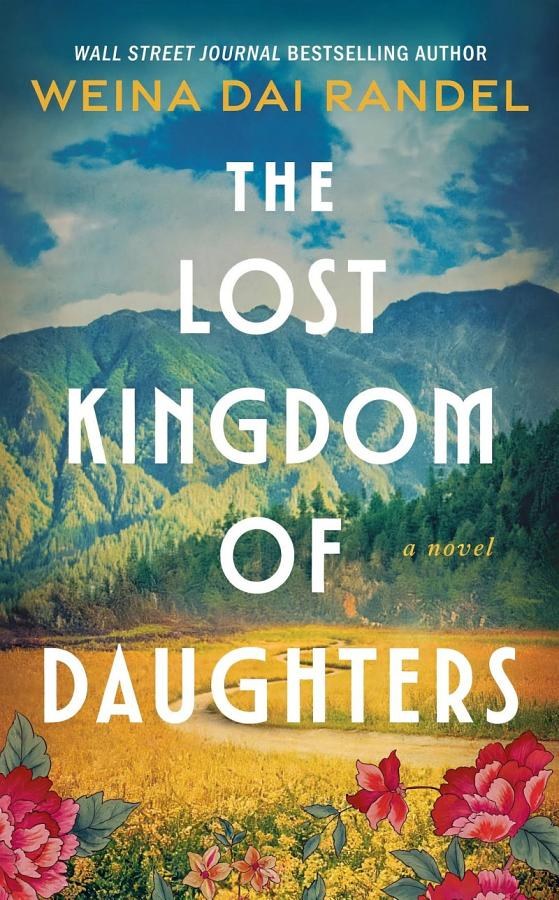
The Lost Kingdom of Daughters
Short review
Weina Dai Randel, author of The Last Rose of Shanghai, sets her new novel in a corner of China that few readers will have encountered in fiction. In the 1950s, around Lugu Lake, the Moso people live in a matriarchal society where there is no marriage and women choose their own partners. Lazo, a young Moso woman, finds her world upended when two American brothers become stranded nearby: Adam, an artist, and Noah, a physician carrying the weight of a troubled past.
What begins as a tale of cultural encounter develops into a story of love, jealousy and a long-buried secret, told across generations as later characters try to uncover what really happened. Randel writes the lake and mountains with real beauty and treats Moso traditions with curiosity and respect rather than exoticism. The romance is tender, and the slow reveal of the past keeps the pages turning. It is already near the top of the US historical fiction new-release chart, and it should appeal to fans of Lisa See or Kristin Hannah.
Sources and retailer details (173 words)
Full review
Weina Dai Randel, author of The Last Rose of Shanghai, sets her new novel in a corner of China that few readers will have met in fiction. In the 1950s, around the shores of Lugu Lake, the Moso people live in a matriarchal society where there is no marriage, households are organised around mothers, and women choose their own partners.
Lazo, a spirited young Moso woman, finds her world turned upside down when two American brothers become stranded in the area. Adam is an artist, captivated by the landscape and its people; Noah is a physician who carries the weight of a painful past. As the brothers are drawn into village life, the connections between them and Lazo grow complicated, and affection gives way to rivalry and jealousy.
The story then widens into a multigenerational quest, as later characters try to piece together a secret that has stayed buried for decades. Randel handles the shifts in time with care, letting each revelation reshape what the reader thought they knew about the earlier events.
The real pleasure is the setting. Randel writes the lake and surrounding mountains with genuine beauty and approaches Moso traditions with curiosity and respect rather than treating them as an exotic backdrop. The romance is tender, the family drama is absorbing, and the questions about freedom, belonging and the choices women make give the novel substance. It is already riding high on the US historical fiction new-release chart, and it should appeal to admirers of Lisa See, Kristin Hannah or Janie Chang.
Reader review (1)
Reviews from visitors. Checked automatically; names are not shown.
A reader ·
The story has emotional moments that stand out right away. It explores love and family along with culture and the lives of women in this lost kingdom. Traditions shape how people connect and I enjoyed learning about a different way of life. That part gets a bit messy when you try to sort it all out. It makes you think about freedom and belonging too. Some sections drag though and it feels like the pace slows down without much warning. I think overall it is an enjoyable read for anyone who likes historical fiction and stories about women. Maybe not every idea connects the way it should but that is easy to miss.