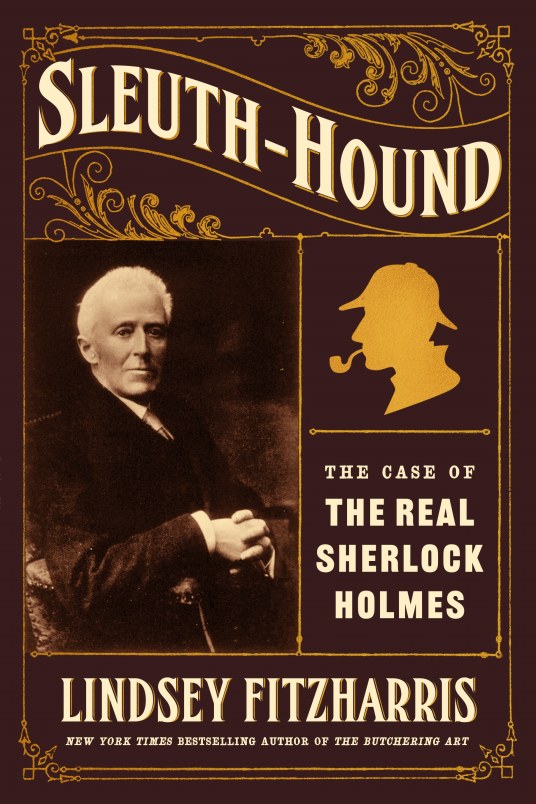
Sleuth-Hound
Short review
Lindsey Fitzharris, the medical historian behind The Butchering Art and The Facemaker, brings her talent for grisly, gripping storytelling to the birth of forensic investigation in Sleuth-Hound. Her subject is Joseph Bell, the Edinburgh surgeon whose powers of observation so impressed a young medical student named Arthur Conan Doyle that he became a model for Sherlock Holmes.
Fitzharris shows that Bell's real life was every bit as intriguing as his fictional echo. Working alongside the police surgeon Henry Littlejohn, he helped bring scientific reasoning to criminal cases, from poisonings to violent deaths, at a time when such methods were still new. The book also follows his later connection with Conan Doyle, including efforts to overturn a wrongful conviction, and Victorian Britain's obsession with the Whitechapel murders. As ever, Fitzharris balances vivid, sometimes gruesome detail with warmth and wit. It is an ideal read for Holmes fans, history lovers and anyone curious about how detectives first learned to let the evidence speak.
Sources and retailer details (161 words)
Full review
Lindsey Fitzharris, the medical historian behind The Butchering Art and The Facemaker, brings her talent for grisly yet gripping storytelling to the birth of forensic investigation in Sleuth-Hound. Her subject is Joseph Bell, the Edinburgh surgeon whose remarkable powers of observation so impressed a young medical student named Arthur Conan Doyle that he became a model for Sherlock Holmes.
Fitzharris quickly shows that Bell's real life was every bit as fascinating as his fictional echo. Working with the city's police surgeon, Henry Littlejohn, he helped bring scientific reasoning into criminal cases at a time when such methods were still novel and often viewed with suspicion. Poisonings, suspicious deaths and courtroom battles fill the pages, and each case reveals something about how Victorian society understood guilt and proof.
The book also follows Bell's later connection with Conan Doyle, including their involvement in efforts to overturn a murder conviction that looked deeply unsafe, and it captures the public frenzy that surrounded the hunt for Jack the Ripper. Throughout, Fitzharris places these stories in their medical and social context, explaining how advances in chemistry, anatomy and observation began to change policing.
As in her earlier books, she balances vivid, sometimes stomach-turning detail with warmth, curiosity and a dry sense of humour, so the history never feels dusty. It is a lively, well-researched account that will delight Holmes fans, history lovers and true crime readers alike, and anyone who has wondered how detectives first learned to let the evidence speak for itself.