Fierceland
Published in Australia
Short review
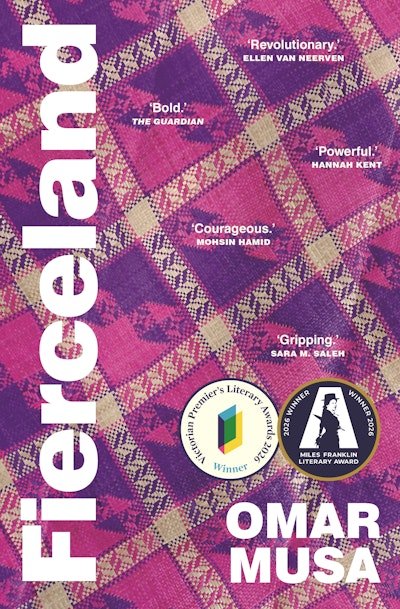
Omar Musa's second novel, winner of the 2026 Miles Franklin Literary Award, is a big, restless family saga that refuses to sit still in one place or one voice. Siblings Roz, an artist in Sydney, and Harun, who has made a life in Los Angeles, return to Kota Kinabalu in Malaysian Borneo for the funeral of their father, Yusuf Mansur, a man who grew rich from palm oil and left a complicated legacy behind him.
From that homecoming the book fans outwards. It opens in 1998 with a journey into the forest, then moves between decades and continents, taking in the parents' first meeting in Adelaide and threads that reach as far as 1970s Nigeria and nineteenth-century Venice. Musa, also a poet and rapper, gives voice to many characters, including the forest itself, and engages directly with Joseph Conrad's Heart of Darkness. The result is ambitious, musical and angry about extraction and empire, yet tender towards its damaged family. Readers who enjoy sweeping, polyphonic fiction will find plenty to admire.
Sources and retailer details (170 words)
Full review
Fierceland, Omar Musa's second novel, won the 2026 Miles Franklin Literary Award and the Victorian Premier's Prize for Fiction, and it is easy to see why judges responded to its scale and nerve. At its centre is a family summoned home. Roz, an artist based in Sydney, and her brother Harun, who lives in Los Angeles, return to Kota Kinabalu in Malaysian Borneo after the death of their father, Yusuf Mansur, a palm-oil magnate whose wealth came at a cost to land and people.
The funeral is only the starting point. Musa opens in 1998 with a trip into the forest, then roams freely across time: the parents' meeting in Adelaide as students, the siblings' divergent adult lives, and strands set in 1970s Nigeria and nineteenth-century Venice. Joseph Conrad appears in person, and the novel can be read as a deliberate answer to Heart of Darkness, told from the side of the people and places such stories usually silence.
What makes the book distinctive is its chorus of voices. Musa, who is also a poet and performer, writes with rhythm and swagger, and he lets the forest speak alongside his human characters, drawing on the Malay hikayat storytelling tradition. That sometimes makes for demanding reading, and not every thread carries equal weight. But the anger about environmental destruction is matched by real compassion for a family trying to understand what their father built and what it destroyed. It is a bold, generous novel for readers who like their literary fiction expansive.