Eliza Sunshine
Published in Canada
Short review
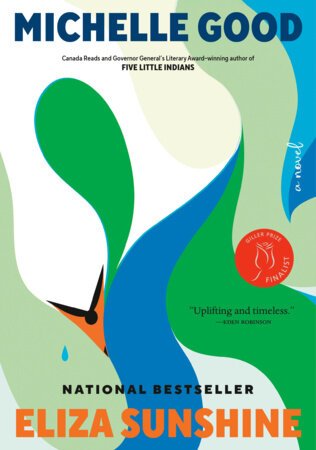
Michelle Good, whose debut Five Little Indians won the Governor General's Literary Award and Canada Reads, returns with Eliza Sunshine, a multigenerational novel shortlisted for the 2026 Giller Prize. It follows three generations of Cree women: Eliza, who comes home after years in a residential school; her grandmother, her nôhkom, Swan; and Eliza's daughter, Ella.
Good, a member of Red Pheasant Cree Nation and a former lawyer who worked with residential school survivors, has drawn on family history, and the novel carries the weight of lived knowledge without ever becoming a lecture. Its focus is on what is passed down between mothers and daughters: language, land, stories, and also the wounds left by institutions designed to sever those ties.
The prose is clear and unhurried, giving each woman room to be stubborn, funny and flawed rather than simply symbolic. The emotional power builds quietly, through small domestic moments as much as large historical ones. It is a moving, important read for anyone who valued Five Little Indians, and an accessible entry point for readers new to Good's work.
Sources and retailer details (178 words)
Full review
Michelle Good made a remarkable debut with Five Little Indians, which won the Governor General's Literary Award and Canada Reads in 2022. Her second novel, Eliza Sunshine, is on the 2026 Giller Prize shortlist, and it widens her lens from a group of survivors to a single family seen across three generations of Cree women.
Eliza is the hinge of the book. She returns home after years spent in a residential school, carrying experiences she cannot easily name, to a community and a family that have also been changed by her absence. Her grandmother Swan, her nôhkom, holds older knowledge and older griefs, while Eliza's daughter Ella grows up in the long shadow of what happened before she was born. Good, a member of Red Pheasant Cree Nation who spent years as a lawyer representing residential school survivors, has said the novel draws on her own family history.
That closeness shows in the detail. The novel is attentive to everyday life, to work, food, humour and the push and pull between relatives who love each other but cannot always reach each other. Good writes plainly and with great control, letting the historical injustice sit underneath the story rather than on top of it, so that its impact accumulates gradually.
If there is a reservation, it is that the steady pace asks for patience in the early chapters. Readers who give it that patience will find a deeply humane novel about inheritance, resilience and the ways women keep culture alive under pressure.