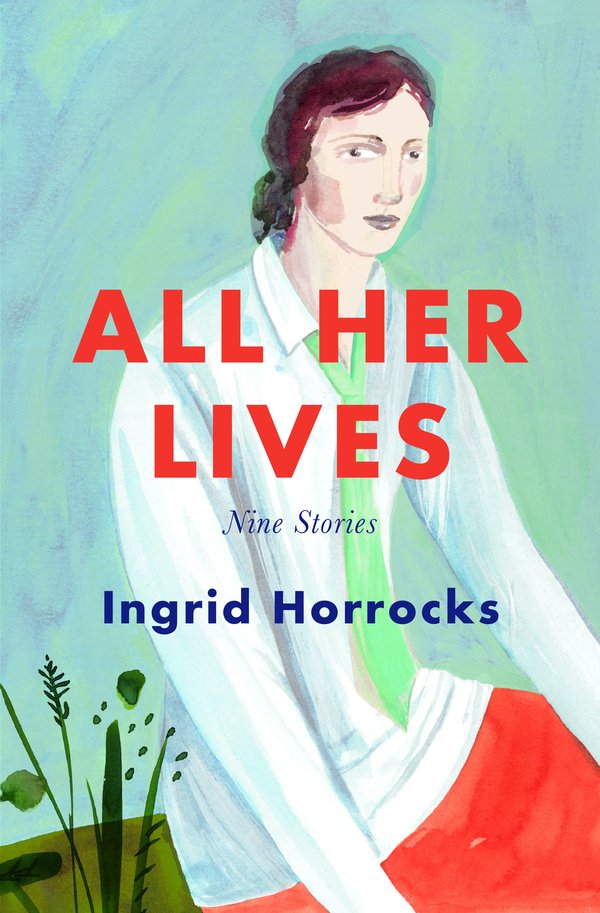
All Her Lives
Published in New Zealand
Short review
Wellington essayist and poet Ingrid Horrocks made her fiction debut with All Her Lives, and promptly won New Zealand's biggest literary prize, the $65,000 Jann Medlicott Acorn Prize for Fiction at the 2026 Ockham New Zealand Book Awards. It is a collection of nine linked stories about women at different stages of life, ranging from the late eighteenth century to the unsettled present.
The settings are wonderfully varied: rural Wairarapa, cold Norwegian ports, a rave in mid-2000s Berlin, and the garden of Plunket founder Truby King. One story follows a mother confronting the cost of her son's climate activism. Running through the whole book is the figure of Mary Wollstonecraft, the early feminist writer, whose own travels and grief echo across the centuries.
Horrocks writes with precision and warmth, and her background in history and travel writing gives the stories a strong sense of place. The collection rewards slow reading; connections between the women surface gradually. It is ideal for readers who enjoy thoughtful short fiction about love, politics, motherhood and the freedoms women have fought for.
Sources and retailer details (178 words)
Full review
All Her Lives is the first work of fiction from Ingrid Horrocks, a Wellington writer previously known for her memoir Where We Swim, two poetry collections and a literary history of women travellers. In May 2026 it won the Jann Medlicott Acorn Prize for Fiction, worth $65,000, at the Ockham New Zealand Book Awards, beating a strong shortlist that included Catherine Chidgey.
The book gathers nine stories, each centred on a woman at a particular point in her life, and together they span more than two centuries. Horrocks moves from girls raised in the garden of Truby King, the founder of New Zealand's Plunket child-health movement, to a queer university student at a Berlin rave in the mid-2000s, to rural Wairarapa and the icy ports of Norway. In one of the most affecting pieces, a mother has to reckon with what her son's climate rebellion will cost the family.
Threaded through the collection is Mary Wollstonecraft, whose eighteenth-century journey through Scandinavia, undertaken in grief and political ferment, becomes a kind of guiding presence. Horrocks uses her lightly, as an echo rather than a lesson, and the effect is to make the women's struggles feel connected across time.
The writing is controlled and observant, with sentences that reward attention, and the judges' description of the book as emotionally intelligent and historically alert feels apt. Some readers may want more plot from individual stories, but the cumulative effect is rich and quietly powerful. This is a fine choice for anyone who loves literary short fiction or historically minded writing about women's lives.