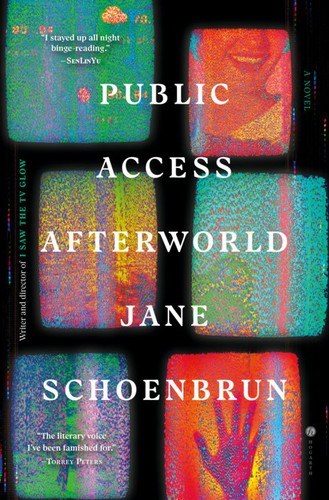
Public Access Afterworld
Short review
Jane Schoenbrun, the filmmaker behind I Saw the TV Glow, makes a striking debut as a novelist with Public Access Afterworld, a sprawling, eerie book about the stories that reach us through screens. The novel moves across decades: a local weatherman in late-1980s Dallas, two teenagers in 2009 as American television switches from analogue to digital, and, years later, a content moderator at an enormous tech company in Austin. Linking them is a pirate television channel that seems to broadcast from somewhere beyond the static.
This is horror of atmosphere and identity rather than jump scares. Schoenbrun is fascinated by how media shapes who we think we are, and by the lonely people who find something like home in a flickering signal. The structure is ambitious and at six hundred pages it demands patience, but the prose is hypnotic and the mood unforgettable. Fans of the film will recognise the themes, while newcomers who like David Lynch, Mark Z. Danielewski or creepypasta lore will find a strange and rewarding world to get lost in.
Sources and retailer details (174 words)
Full review
Jane Schoenbrun, the filmmaker behind the cult hit I Saw the TV Glow, makes a striking debut as a novelist with Public Access Afterworld, a sprawling and eerie book about the stories that reach us through screens and the people who disappear into them.
The novel unfolds across several decades. In late-1980s Dallas, a local weatherman encounters something he cannot explain. In 2009, as American television switches from analogue to digital broadcasting, two teenagers, David and Erin, become fixated on a signal that should not exist. Years later, Bethany Peters, a trans content moderator at a vast tech company in Austin, finds herself drawn into the same mystery. Linking them all is a pirate channel that appears to transmit from somewhere beyond the static.
This is horror built on atmosphere, memory and identity rather than jump scares. Schoenbrun is fascinated by how media shapes our sense of self, and by the outsiders who find a kind of belonging in late-night broadcasts and online rabbit holes. The book also deals with heavy emotional territory, handled with care, and readers should expect some difficult moments. The structure is ambitious, shifting voices and formats, and at over six hundred pages it asks for patience. Those willing to settle in will be rewarded with hypnotic prose and a mood that lingers long after the last page. Admirers of the film will recognise its preoccupations, and readers who love David Lynch, House of Leaves or internet folklore will find plenty to obsess over.