From the Library of Jurgen Leitner
Short review
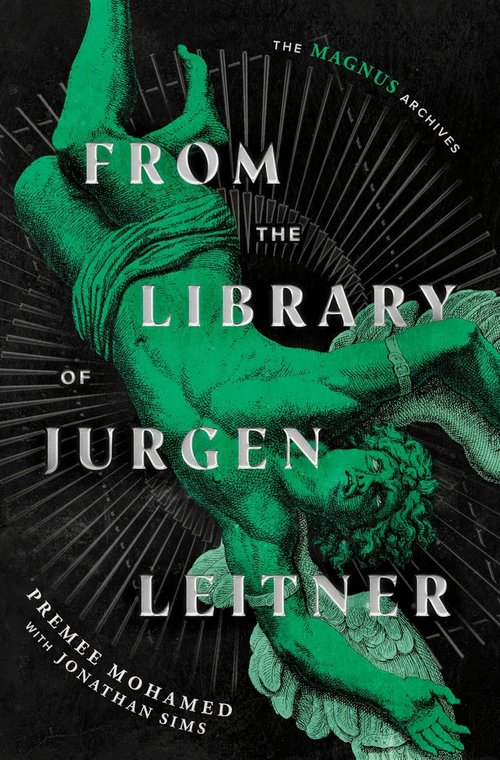
From the Library of Jurgen Leitner takes one of the most notorious institutions in the horror podcast The Magnus Archives and opens its doors. Jurgen Leitner has assembled a private collection of books touched by forces that feed on human fear, and he needs staff to catalogue, test and contain them.
Premee Mohamed, writing with the podcast's creator Jonathan Sims, follows two employees. Hugh Franklin joins in 1992 as an anxious, multilingual research assistant who badly needs the job. A year later comes Sebastian Everett, a polished acquisitions specialist whom Leitner treats almost as an heir. Their alternating timelines gradually lock together.
The masterstroke is treating cosmic horror as workplace drama. There are progress meetings, safety reports and cups of tea after colleagues die, and cursed volumes that range from a book bearing a single word to a booklet that begins addressing its reader. Strange Horizons praises the way the novel reconsiders its source rather than giving a guided tour, and notes newcomers can follow it without knowing the podcast. It entered Publishers Weekly's hardcover fiction list at No. 22.
Sources and retailer details (180 words)
Full review
Tie-in novels often feel like guided tours of familiar rooms. From the Library of Jurgen Leitner is more ambitious. Written by Premee Mohamed with Jonathan Sims, creator of the horror podcast The Magnus Archives, it builds a full novel around a place long discussed in the podcast's mythology: a private library of books touched by the entities that feed on fear.
Two employees carry the story. In 1992, Hugh Franklin, multilingual, apologetic and short of options, becomes a research assistant. A year later Sebastian Everett arrives as an acquisition specialist, wealthy and confident that rules are for other people. Leitner tells both that they are different from the others. The chapters alternate between their timelines, and while Strange Horizons notes that the structure takes time to pay off, the strands eventually fit together with real cunning.
What makes the book distinctive is its office. Staff file reports, attend progress meetings and complain about one another while handling volumes that can burn, infect or take a reader apart. Leitner himself is chilling precisely because he believes he is protecting the world, calmly weighing deaths among his staff against the danger of letting the books loose. Mohamed's satire of a rich man privately owning danger is pointed, though occasionally she states her argument more than once.
Longtime listeners will spot familiar powers; newcomers can follow everything without the lore. The novel entered Publishers Weekly's hardcover fiction list at No. 22 in its first week, a strong showing for a horror title.