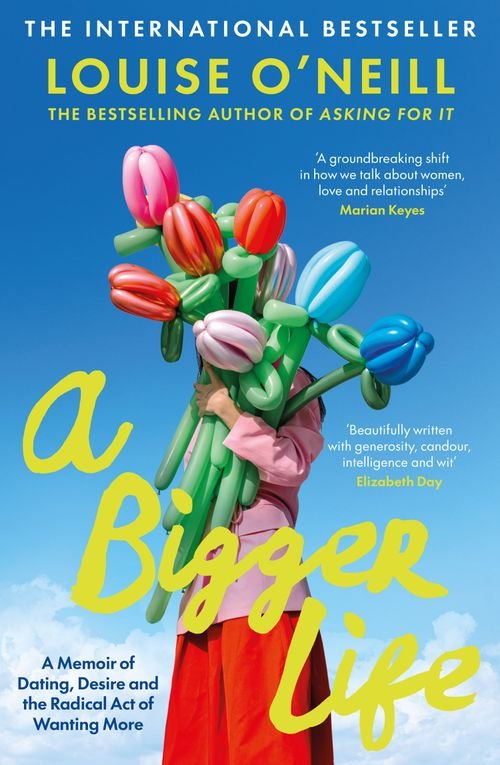
A Bigger Life
Published in the United Kingdom
Short review
Irish novelist Louise O'Neill, author of Asking For It, turns to memoir with A Bigger Life, a candid, funny and hopeful account of rebuilding after heartbreak. It has been reviewed in The Irish Times and the Irish Independent and is shortlisted at the 2026 An Post Irish Book Awards.
At thirty-eight, O'Neill finds herself single after the end of a long relationship with a partner with whom she had bought a house and imagined a future. Faced with all the familiar fears women are taught to have about time running out, she decides to try something different: a year of saying yes. She travels to Paris, London and New York, dates widely, explores therapies and retreats, and asks what she actually wants rather than what she is supposed to want.
O'Neill writes with warmth and vulnerability about ageing, desire, motherhood, her past eating disorder and the way online culture shapes our expectations of love. The Paris chapters in particular are full of sensual pleasure. Comparisons with Eat, Pray, Love are inevitable, but her feminist sharpness gives the book its own voice. It is an uplifting read for anyone starting over.
Sources and retailer details (190 words)
Full review
Louise O'Neill made her name with hard-hitting fiction such as Only Ever Yours and Asking For It. In A Bigger Life, published by HQ in September, she turns her clear eye on herself. The memoir has been reviewed in The Irish Times and the Irish Independent and is on the 2026 An Post Irish Book Awards shortlist.
The book begins with a breakup. At thirty-eight, O'Neill's long relationship ends, along with the house and future she had planned around it. She writes honestly about the panic that follows, the cultural messaging that tells women over thirty-five they are running out of time, and her fears about motherhood and desirability. Rather than settle, she sets out to discover what she wants, travelling to Paris, London and New York, going on a great many dates and experimenting with wellness practices, retreats and therapies.
The strongest passages connect this adventure to her history: years lost to an eating disorder, the aftermath of sexual assault, and a long struggle to feel at home in her body. Against that background, her pursuit of pleasure and connection feels like a reclaiming. She is also perceptive about how online discourse turns dating into a battleground, and she finds, to her own surprise, more good people than bad.
Critics have noted that the book could probe the costs of its wellness journey more deeply, and readers wary of self-discovery memoirs may feel the format is familiar. Yet O'Neill's humour, candour and warmth make it a generous companion, especially for anyone navigating heartbreak or the pressure to have life figured out.