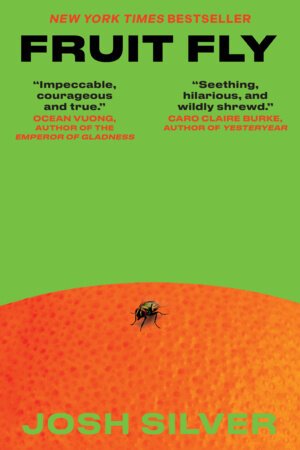
Fruit Fly
Short review
Satire about publishing has become a genre of its own since Yellowface, and Josh Silver's adult debut is one of its sharpest entries. It comes from Crooked Lane Books, an independent house best known for crime fiction, and it has become a word-of-mouth hit, now eight weeks on Publishers Weekly's trade paperback list.
Mallory Maddox was once a literary sensation; seven years of writer's block later, she is desperate for a comeback. Then she meets Leo, a young gay man living rough and battling addiction, and sees in his life the story she needs. Silver keeps the reader complicit, uncomfortable and often laughing.
Publishers Weekly's starred review praises the sympathy Silver generates for his badly behaved leads, and that mix of cruelty and tenderness is the book's signature. It deals frankly with addiction and sex work, and the humour is pitch-black; the thriller elements serve the satire, so do not expect a conventional page-turner. For readers who like fiction that skewers the culture industry, it is a provocative independent-press success.
Sources and retailer details (170 words)
Full review
Satire about publishing has become a genre of its own since Yellowface, and Josh Silver's adult debut is one of its sharpest entries. It comes from Crooked Lane Books, an independent house better known for crime fiction, and it has quietly become a word-of-mouth hit: eight weeks on Publishers Weekly's trade paperback list and counting.
Mallory Maddox was once a literary sensation. Seven years of writer's block later, she is desperate for a comeback. Then she meets Leo, a young gay man living rough and battling addiction, and recognises in his life exactly the story she needs. The novel follows what happens when one person decides another's suffering is raw material, and Silver keeps the reader complicit, uncomfortable and often laughing.
The early reviews suggest the balancing act works. Publishers Weekly's starred review praises how much sympathy Silver generates for his badly behaved leads, and the New York Times called it funny and nasty. That mix of cruelty and tenderness is the book's signature. Mallory is monstrous but never a cartoon, and Leo is far more than a victim.
Readers should know that the novel deals frankly with addiction, homelessness and sex work, and its humour is pitch-black. The thriller elements serve the satire rather than the other way round, so anyone expecting a conventional twisty page-turner may be wrong-footed. For readers who enjoy fiction that skewers the culture industry while asking who gets to tell whose story, this is one of the year's most provocative independent-press successes.