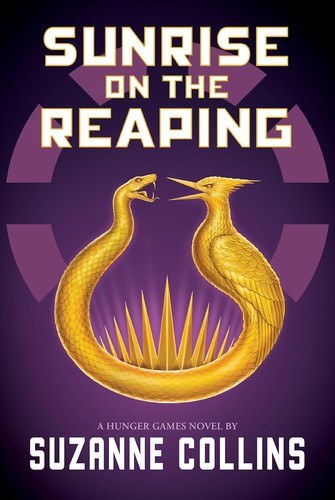
Sunrise on the Reaping
Short review
Suzanne Collins's return to Panem remains the top-selling teen book in the US, with a movie tie-in edition also on the children's bestseller list. Sunrise on the Reaping goes back to the fiftieth Hunger Games, the second Quarter Quell, when twice the usual number of tributes are sent into the arena. One of them is a young Haymitch Abernathy from District 12, years before he becomes the sardonic mentor readers met in the original trilogy.
Collins uses Haymitch's story to dig into themes she has always handled brilliantly: propaganda, spectacle and the ways a cruel system recruits people into its machinery. The arena sequences are tense and inventive, but the emotional core lies in Haymitch's relationships back home and in the slow realisation of what the Capitol is really doing. Knowing roughly where his life ends up only adds to the tension. It is darker than some earlier entries and best suited to older teens and adults, but it is a gripping, thoughtful addition that makes the original books richer on a reread.
Sources and retailer details (173 words)
Full review
Suzanne Collins's return to Panem remains the top-selling teen book in the US more than eighteen months after release, and a movie tie-in edition has joined the original on the children's bestseller list. Sunrise on the Reaping goes back to the fiftieth Hunger Games, the second Quarter Quell, when twice the usual number of tributes are sent into the arena to mark the anniversary.
One of those tributes is a teenage Haymitch Abernathy from District 12, decades before he becomes the sardonic, hard-drinking mentor readers met in the original trilogy. Collins introduces us to the young man he was before the Games: his family, his first love and the community he would do anything to protect. When his name is called, everything he cares about is placed at risk.
The arena sequences are tense and inventive, full of the strategic twists that made the series famous, but the real power of the book lies elsewhere. Collins uses Haymitch's experience to explore propaganda, media spectacle and the ways an oppressive government turns its citizens' lives into entertainment. She is particularly sharp on how stories get rewritten by those in charge, and that idea gives the novel a resonance beyond the plot.
Knowing roughly where Haymitch ends up only heightens the sense of dread. This is one of the darker instalments in the series and better suited to older teens and adults, yet it is also among the most thoughtful. It makes a gripping standalone and deepens the original books immeasurably on a reread.
Reader reviews (2)
Reviews from visitors. Checked automatically; names are not shown.
A reader ·
I read this book twice. Once with my physical copy and the second time as an audiobook. My heart ached both times. This is such an impactful book that shows a lot more than the original trilogy. I loved all the characters, especially Haymitch as we learn and discover more about his past. I was so baffled by everything that happened and honestly can’t even explain how shocked I felt. There is so much I would love to say but instead I’ll just say if you love the original trilogy you will adore this book! It is my favourite from Collins.
A reader ·
Hay personajes a los que conocemos tan bien que creemos saberlo todo sobre ellos. Pero después llega una historia como esta y nos demuestra que todavía nos quedan muchas cosas por descubrir. En Amanecer en la cosecha, Suzanne Collins nos lleva a los 50.º Juegos del Hambre, el Segundo Vasallaje, donde conocemos a un Haymitch mucho más joven, antes de convertirse en ese hombre sarcástico, desencantado y aparentemente indiferente que recordamos de la trilogía original. Ahí está una de las cosas que más me gustaron de este libro: descubrir al chico que había detrás de todo eso. Alguien que tenía personas a las que quería, ilusiones y razones para luchar. Alguien que todavía tenía mucho que perder. Por supuesto, los Juegos vuelven a mostrarnos la crueldad del Capitolio, pero también esa manipulación constante de la información, de las imágenes y de lo que el público cree estar viendo. Porque el horror no termina en la arena: también está en cómo se cuenta y se convierte en espectáculo. Es una lectura que engancha, que por momentos duele y que, sobre todo, te hace mirar a Haymitch de otra manera. Después de conocer su historia, es difícil volver a pensar en él como antes. Si alguna vez te preguntaste qué había detrás de Haymitch, este libro merece un lugar en tu lista de lecturas.